(And Why So Many Homeowners Accidentally Become One Without Realising)**
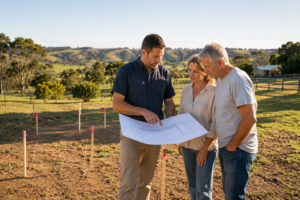
There’s a certain romance to the idea of being an owner-builder.
You picture yourself taking charge, calling the shots, managing the trades and watching a structure rise out of the ground under your direction — all while saving money.
But here’s the reality:
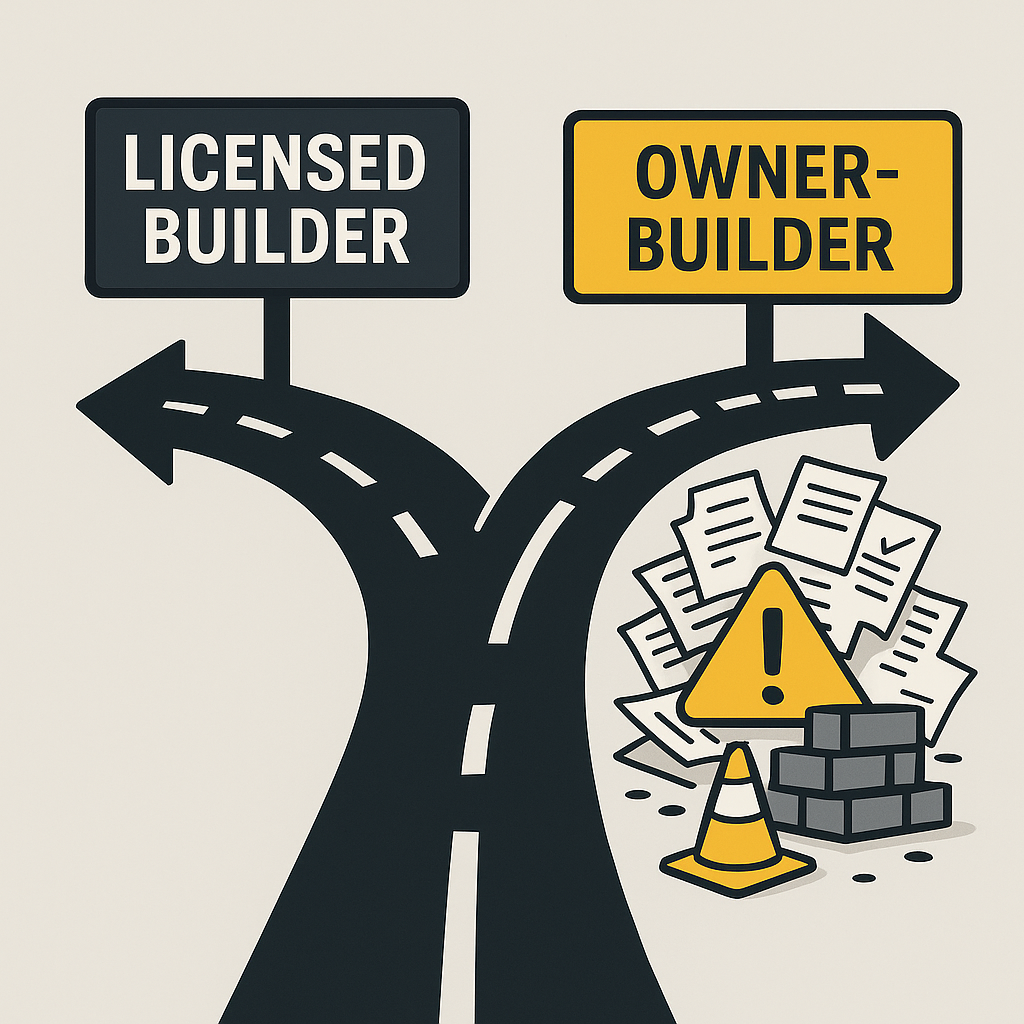
Becoming an owner-builder isn’t a “DIY project”… it’s stepping into the legal shoes of a licensed builder.
And many people become owner-builders by accident, simply because of how they pay for materials and trades.
Add Fleurieu building conditions — high winds, corrosion, bushfire overlays, reactive soils — and the risks multiply.
Here’s everything homeowners need to know before they stumble into this role.
Fourteen things to consider before you even begin …
1. When You’re an Owner-Builder, YOU Are the Builder of Record
South Australian law is extremely clear:
If there is no single licensed builder taking contractual responsibility for the entire project, the homeowner becomes the builder.
This is true even if:
- you don’t pick up a tool
- you hire trades for all labour
- you only “organise” things
- you buy a shed kit and get “someone” to erect it
- you separately pay the concreter, installer, plumber, or electrician
If no one builder is accountable…
the law assigns accountability to you.
You become responsible for:
- construction quality
- structural integrity
- building code compliance
- WHS (on-site safety)
- coordinating trades
- fixing defects
- future warranties
- mandatory inspections
- building certification
- neighbour notifications
- meeting engineering specifications
If anything goes wrong, one question is always asked:
“Who is the builder?”
And the answer is you.
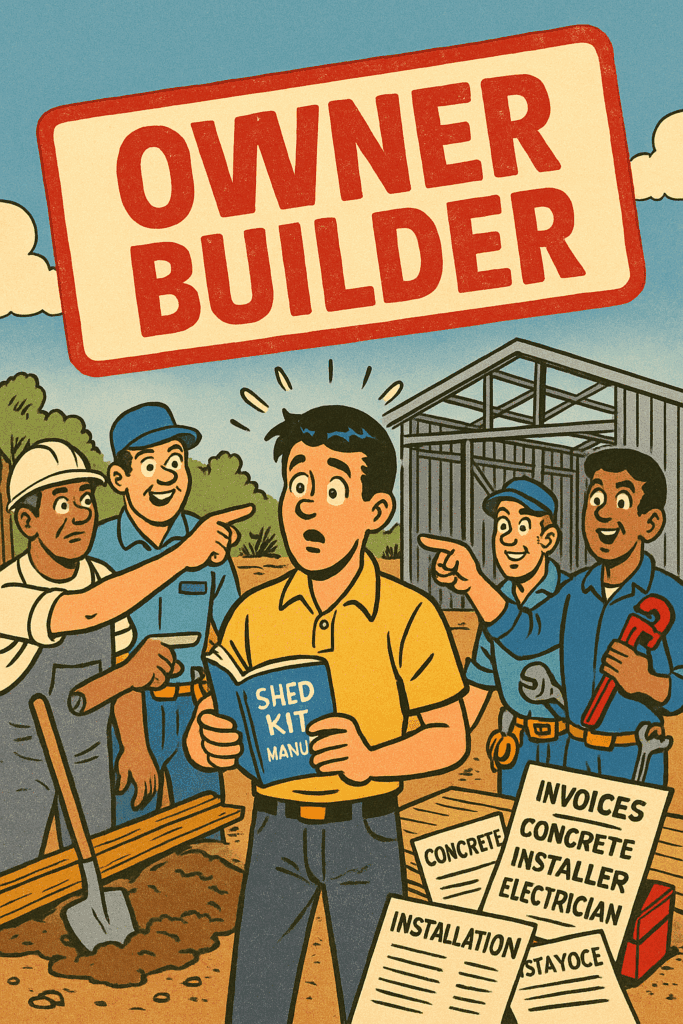
2. You Become an Owner-Builder the Moment You Pay Trades Separately
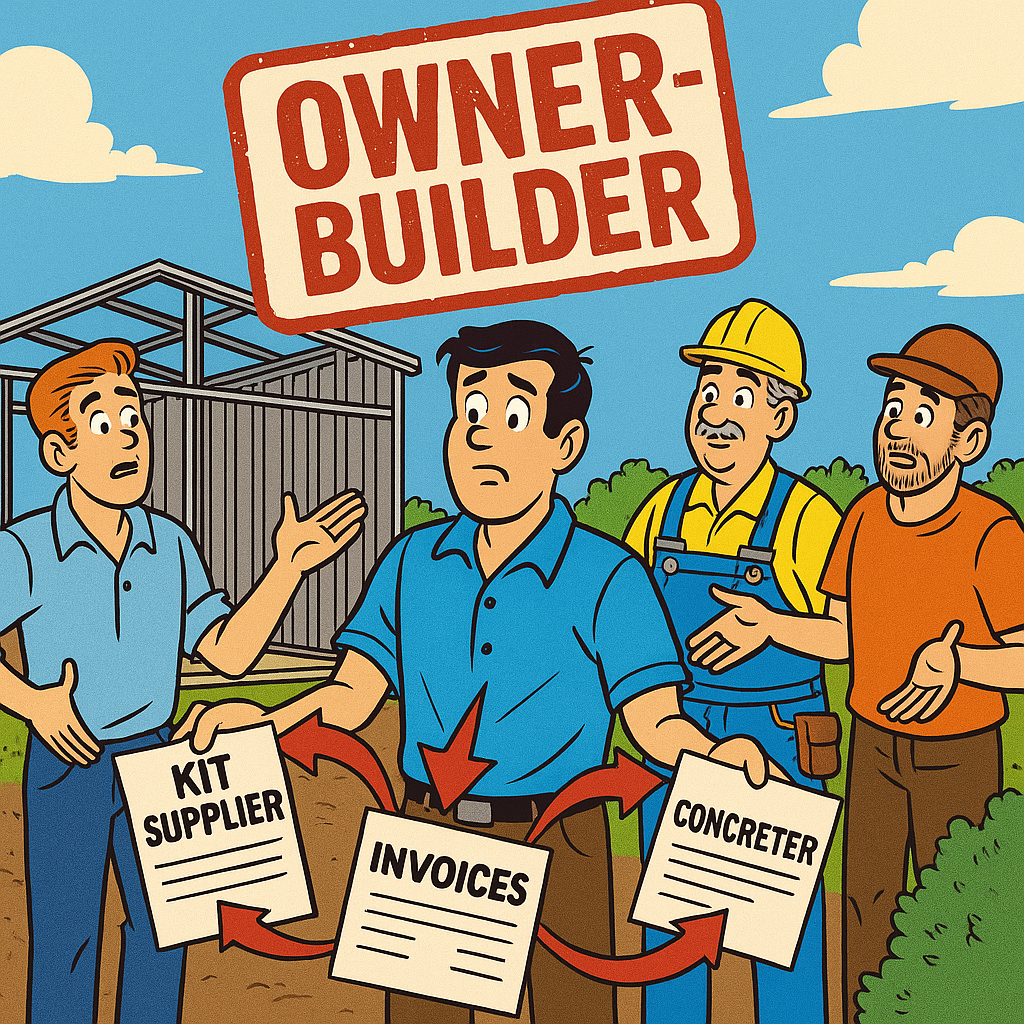
Many shed-kit suppliers create this situation — intentionally or not — by:
- selling a kit
- then handing you the phone numbers of trades
- giving “suggested rates” but no contracts
- offering no responsibility for construction
- telling you to pay each one individually
- offering no warranty on installation
- It sounds innocent.
It sounds innocent. But legally, this means:
There is no single builder overseeing the entire project. So you become the “owner” builder.
Most homeowners don’t realise they’ve stepped into one of the most regulated roles in the construction industry.
3. The ‘Supplier + List of Tradies’ Trap
This happens constantly on the Fleurieu:
A homeowner buys a shed kit. The supplier says:
“We don’t install, but here’s a bloke who can.”
Or:
“Just find your own concreter — it’s cheaper that way.”
Or:
“We only sell the kit; we don’t construct.”
The result?
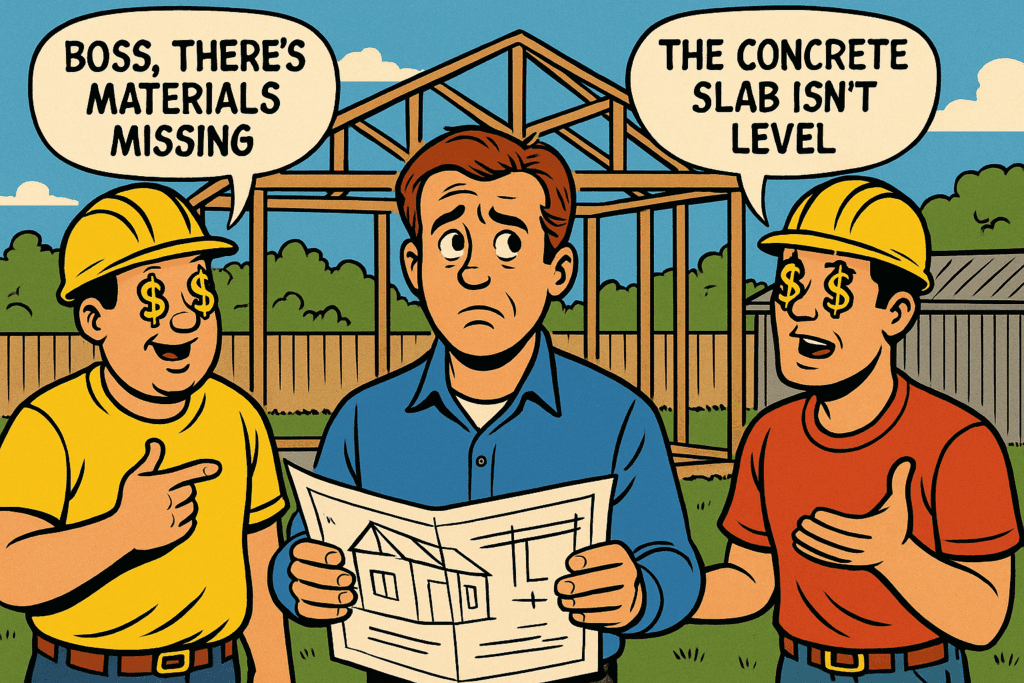
You’re suddenly:
- the builder
- the project manager
- the WHS officer
- the contractor supervisor
- the compliance manager
- the insurance bearer
- the person legally responsible for everything
And you still haven’t put a tek screw in.
4. And Because You’re an Owner-Builder… You Must Lodge Council Applications in Your Own Name
As an Owner-Builder (Applicant / Responsible Person)
This means you must handle:
- Development Application
- Building Rules Consent
- engineering
- soil reports
- site plans
- notifications
- inspections
- variations
- compliance documentation
A licensed builder typically handles all of this. Owner-builders must do it themselves.
Owner Builder Warning
You become an Owner-Builder in SA the moment:
- you buy materials yourself (e.g., shed kits), and
- you pay trades separately (e.g., concreter, installer), and
- no single builder is contracted to deliver the entire project.
This means YOU are legally responsible for:
– council approvals
– engineering compliance
– mandatory inspections
– WHS and site safety
– defects and future warranties
– insurance and liability
– ensuring all trades are licensed
– ensuring the structure is safe and compliant
Most homeowners don’t realise they’ve become the builder until something goes wrong — and by then, it’s too late.
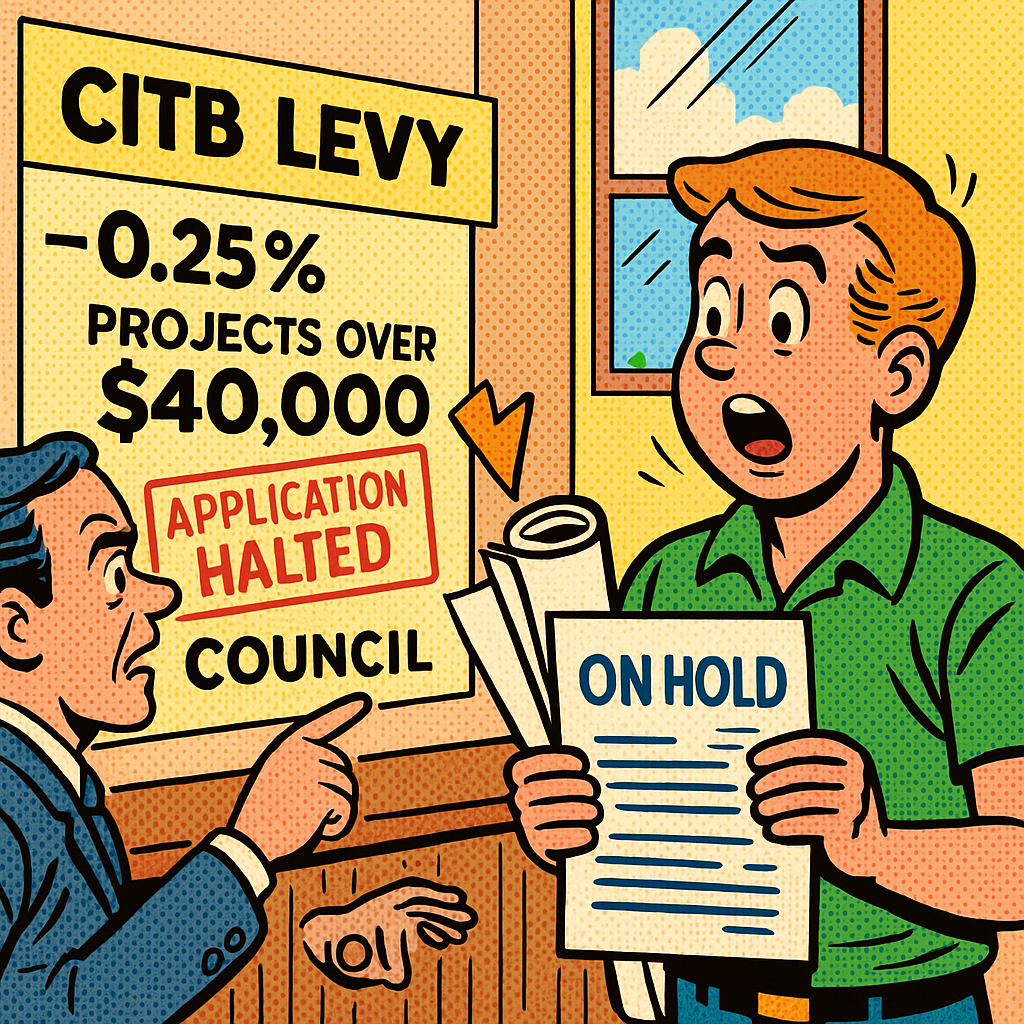
5. You Must Pay the CITB Levy if the Project Exceeds $40,000
A little-known SA rule:
If your project value exceeds $40,000, you must pay the CITB Levy (0.25% of total project value) before Building Rules Consent is issued.
Many owner-builders aren’t aware of this cost until council halts their application.
6. Mandatory Timelines Apply — Whether You’re Ready or Not
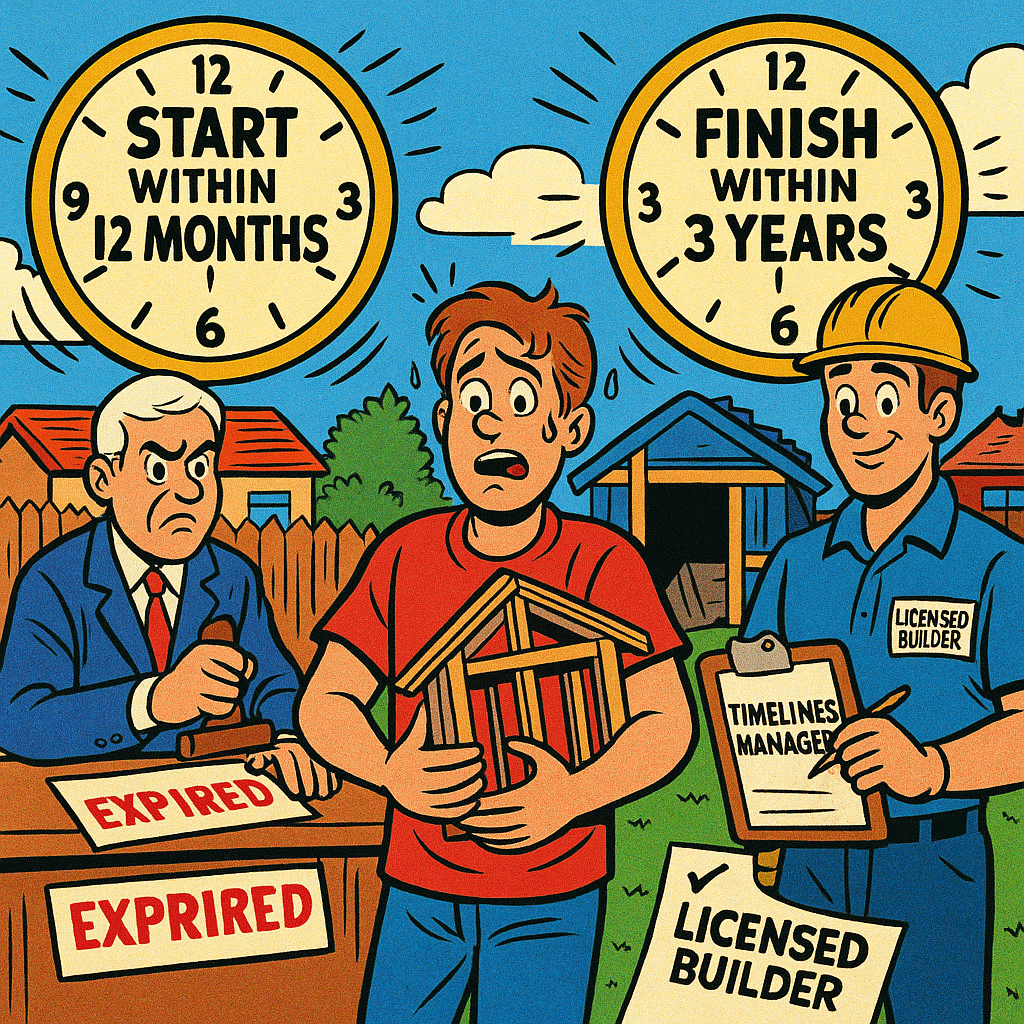
Under South Australian building law:
- You must start work within 12 months of Development Approval.
- You must finish within three years.
Licensed builders manage these timelines.
Owner-builders often struggle — resulting in expensive extensions or reapplications.
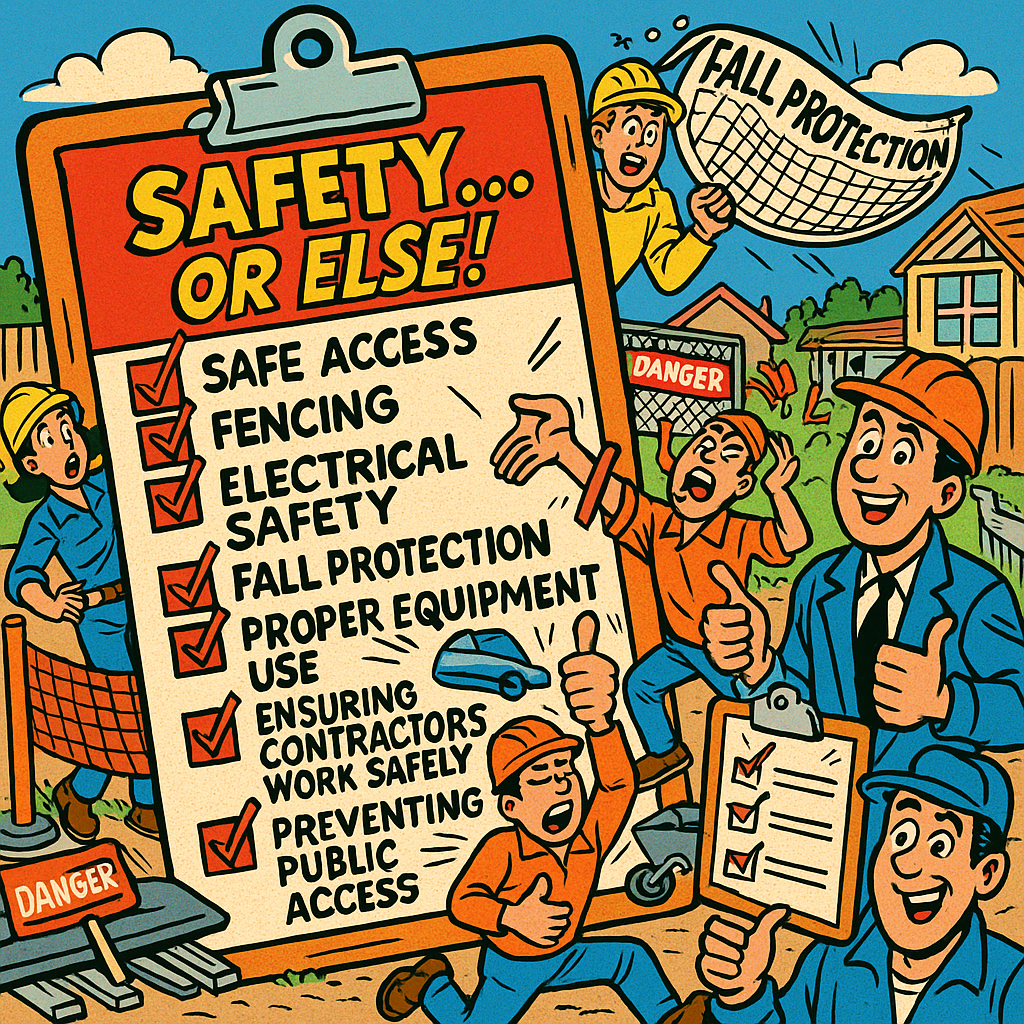
7. You Are Legally Responsible for On-Site WHS (Even If You’re Not There)
As an owner-builder, you are responsible for:
- fencing
- electrical safety
- fall protection
- proper equipment use
- ensuring contractors work safely
- preventing public access
- protecting delivery drivers
- hazard management
- site access
If someone injures themselves on your site, the legal question is:
“Who was responsible for safety?”
Again — you.
8. You Must Use Licensed Trades for Specialist Work
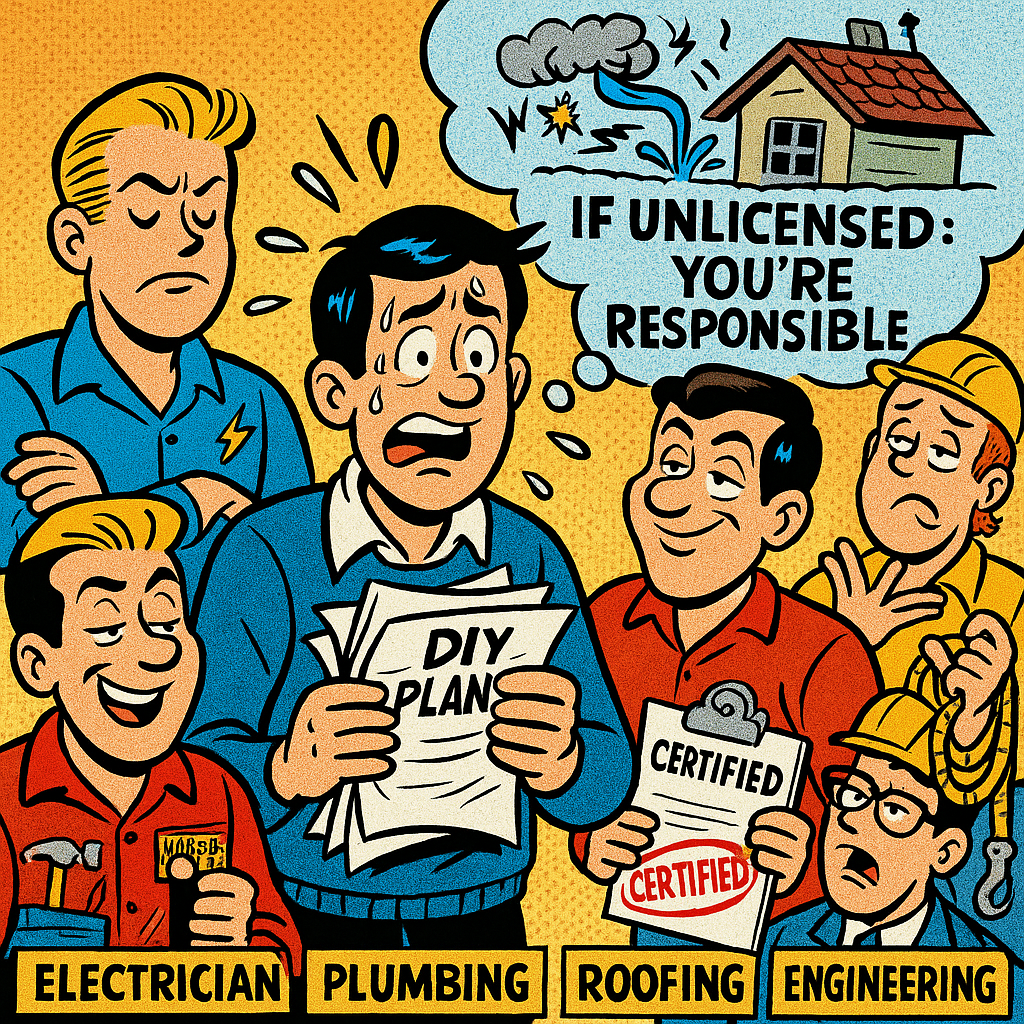
Owner-builders cannot legally do:
- electrical work
- plumbing
- gas fitting
- most roofing work
- structural work requiring engineering sign-off
- waterproofing
You must hire licensed professionals and keep their compliance certificates.
If something goes wrong and a trade wasn’t licensed?
You become fully responsible.
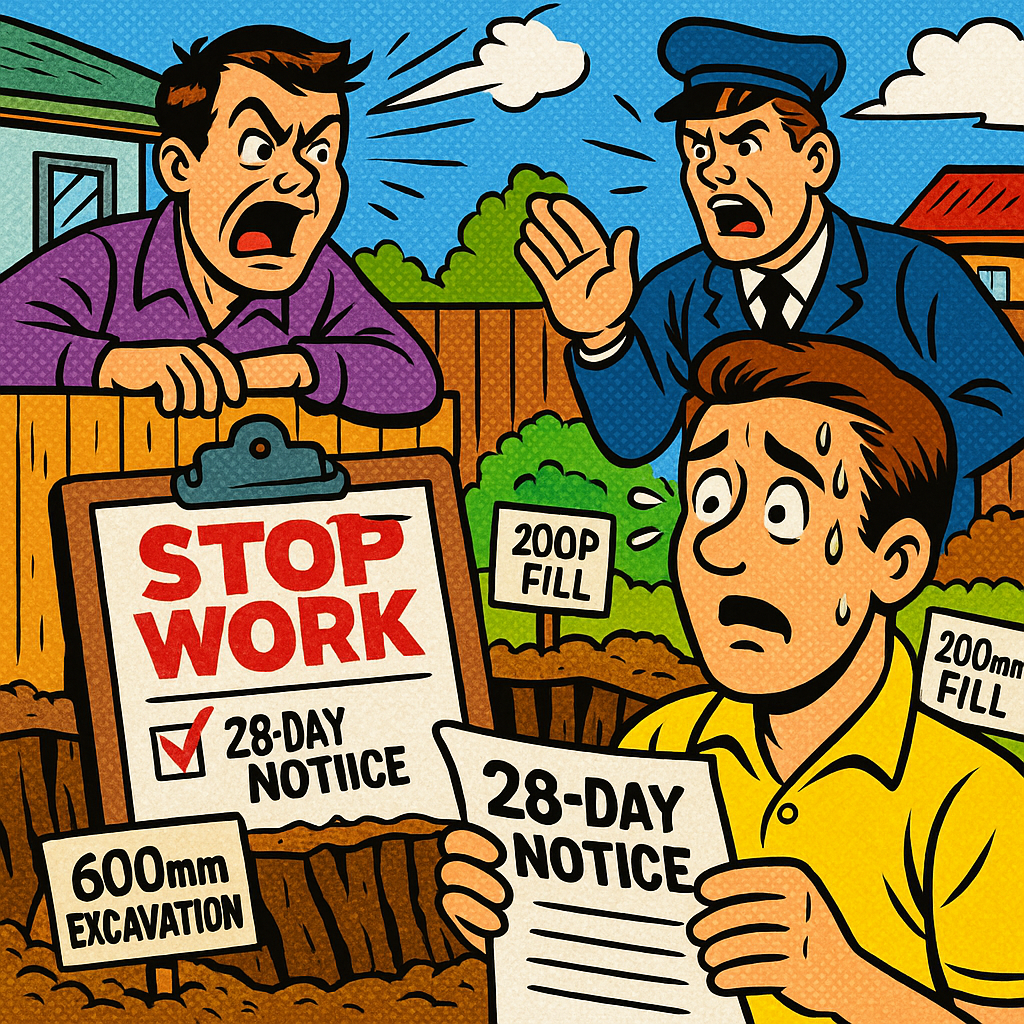
9. You Must Notify Neighbours 28 Days Prior to Certain Works
If you plan to:
- excavate 600 mm or more near a boundary
- place 200 mm or more of fill near a boundary
You must give neighbours 28 days written notice.
If you forget?
Expect disputes, delays, or stop-work orders.
10. Insurance Is a Minefield for Owner-Builders
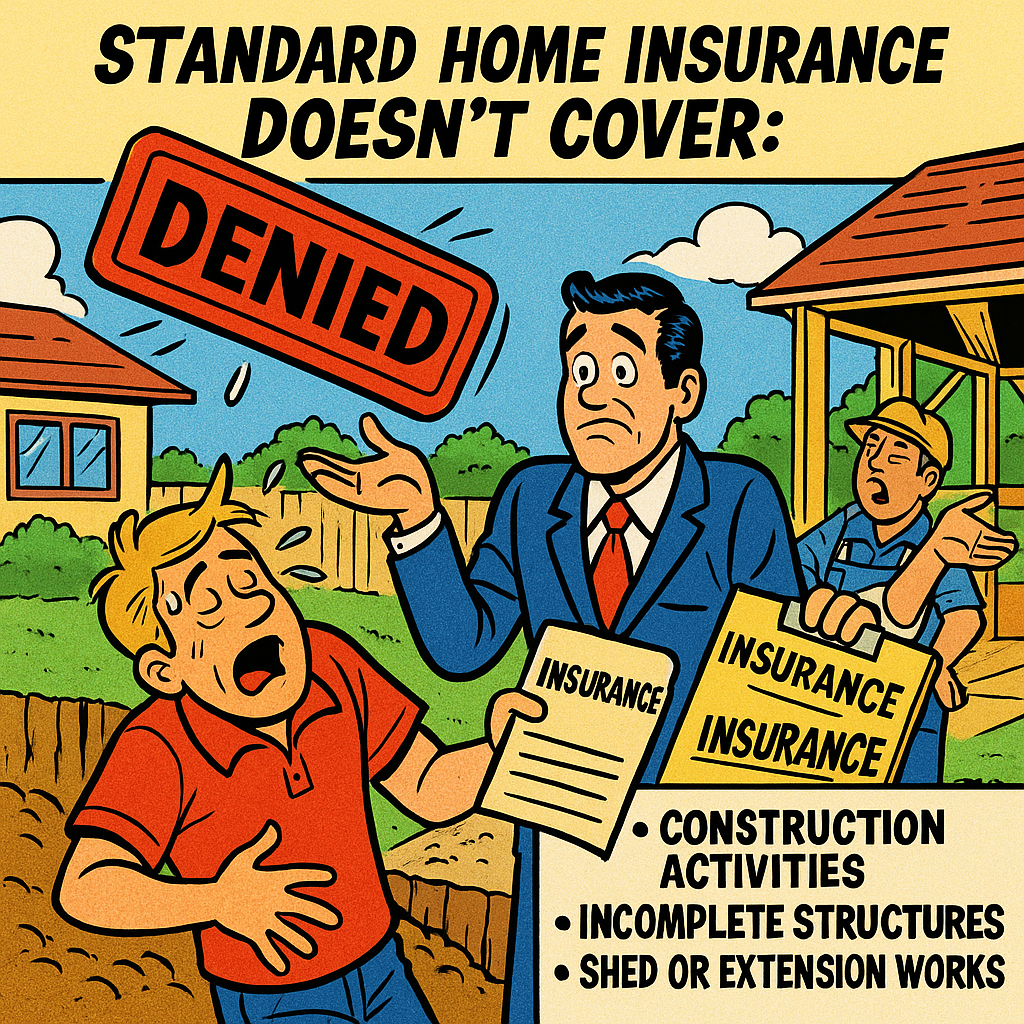
Standard home insurance does not cover:
- construction activities
- incomplete structures
- shed or extension works
- injuries on site
- unfixed building materials
You are expected to obtain:
- owner-builder construction insurance
- public liability insurance
- contract works insurance
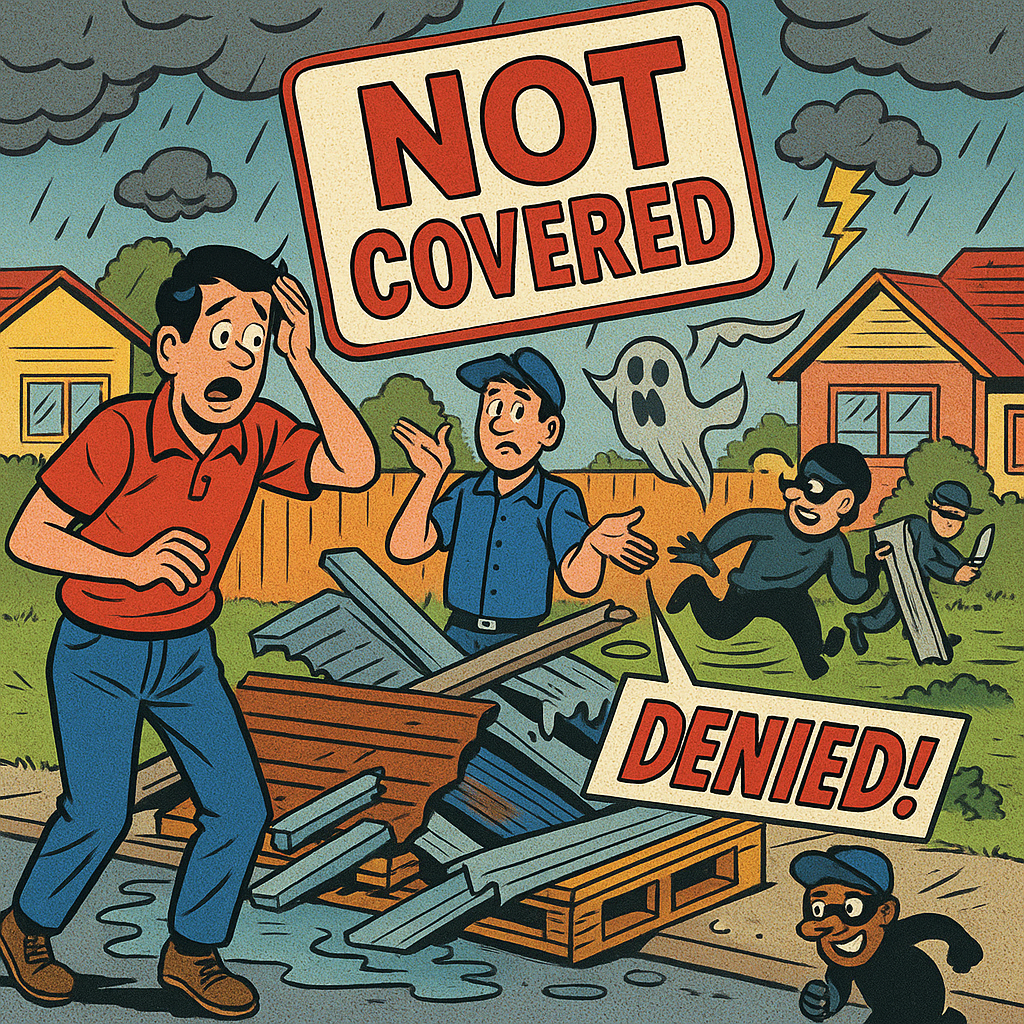
The biggest trap:
Unfixed shed kits are NOT covered.
If the materials are:
- stolen
- water damaged
- dented
- bent
- vandalised
- dropped on delivery
- dumped on your verge
- rusted
- blown over
Your insurer pays nothing.
Not until it becomes a certified, completed structure.
11. You Are Liable for Defects — For Years
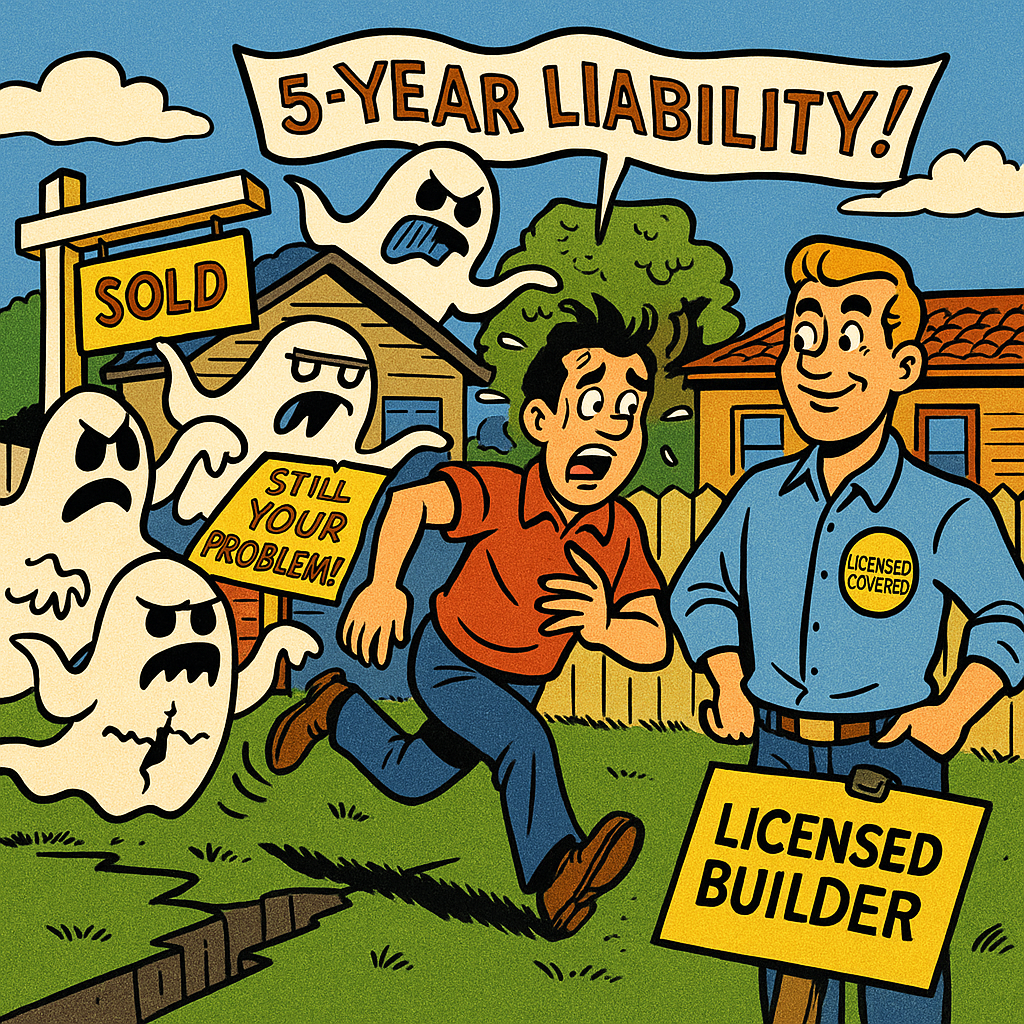
Licensed builders carry defect liability and structural warranty obligations.
Owner-builders don’t.
If defects appear after completion, you are responsible.
Even worse —
if you sell the property, the liability follows you for up to five years.
12. Fleurieu Conditions Make Owner-Building Even Riskier
The Fleurieu is one of the toughest regions in SA for construction.
We deal with:
- bushfire zones
- extreme coastal wind uplift
- salt corrosion
- seasonal flooding
- varying soil reactivity
- steep blocks
Generic engineering or DIY construction simply cannot cope with these conditions.
Wrong footing design?
Wrong fixings?
Wrong engineering?
Wrong steel coating?
The result can be catastrophic.

13. Real-World (Fictional but Painfully Believable) Fleurieu Scenarios
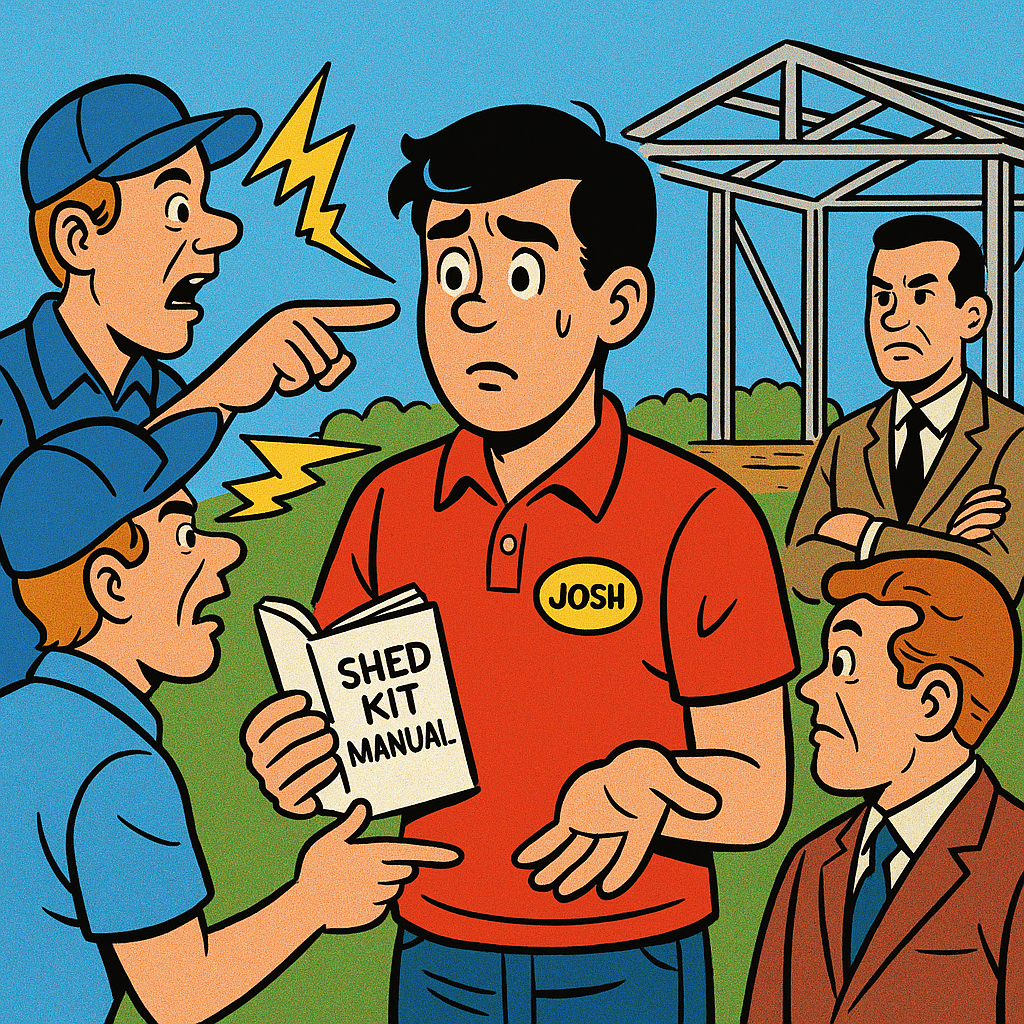
Scenario A — Josh from Goolwa
Buys a kit online.
Installer blames concreter.
Concreter blames kit manufacturer.
Manufacturer blames installer.
Council asks, “Who’s the responsible builder?”
Answer: Josh.
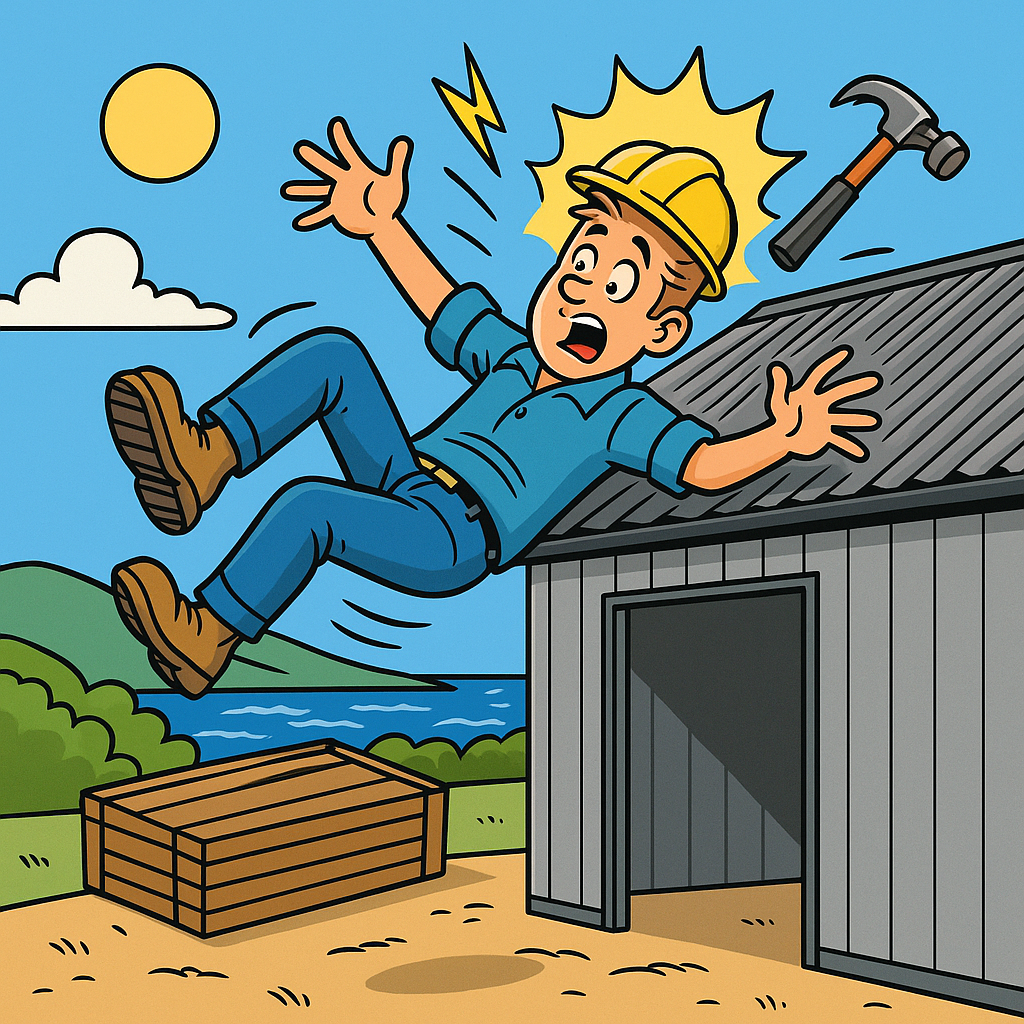
Scenario B — Megan from Encounter Bay
Roofing contractor injures themselves stepping on a loose sheet.
Megan had no public liability insurance.
This becomes a nightmare.
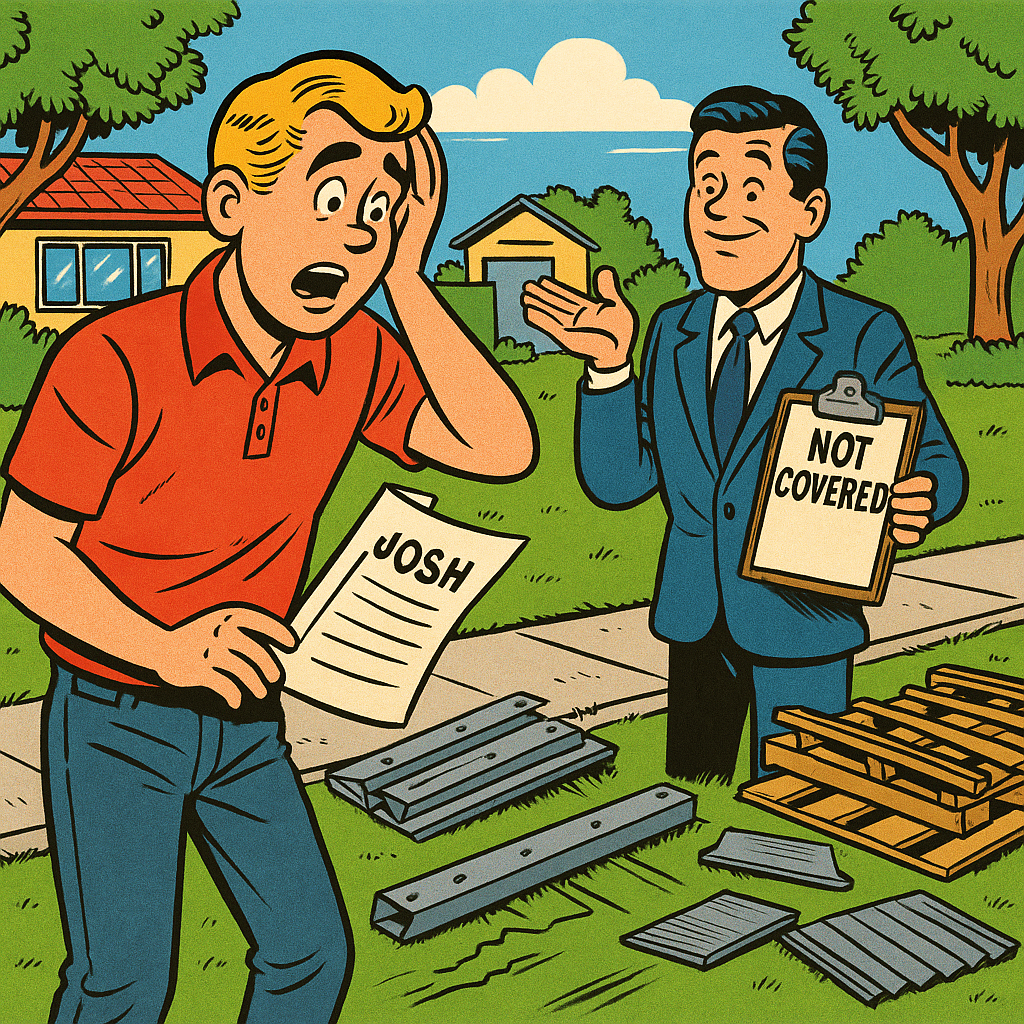
Scenario C — Tom from Port Elliot
Shed kit delivered to his verge overnight.
Half of it stolen by morning.
Insurance says “not covered.”
All of these happen.
Frequently.
14. The Bottom Line: Being an Owner-Builder Isn’t a Shortcut — It’s a Legal Burden
For a small number of people, owner-building works fine.
But for many, it becomes:
- a compliance headache
- a legal risk
- an insurance problem
- a financial blowout
- a safety liability
- and an extremely steep learning curve
If you’re considering heading down this path, make sure you fully understand the responsibility you’re taking on.
Want a Project Without the Stress, Liability, or Guesswork?
At ShedEx Fleurieu, we handle the complete project, including:
- design
- engineering
- council
- materials
- construction
- compliance
- mandatory inspections
- safety
- insurance requirements
- warranties
So you don’t become the builder —
and you don’t accidentally inherit the responsibilities of one.
No headaches.
No surprises.
No accidental owner-builder drama.
Just a safe, compliant, high-quality shed built right.